Solução
 Centro de Apoio
 Sobre nós
 Contato
How to Reset an iPhone Locked to Owner: 5 Methods (Full Guide)
 Samuel Spenser publicado em novembro 11, 2026Desbloquear iOSLeitura de 3 minutos
You thought resetting your iPhone would help, but then you see Locked to Owner on your screen. As a result, anyone without the correct Apple ID credentials will find the phone locked by Activation Lock.
Esse problema geralmente ocorre ao tentar redefinir um iPhone que está bloqueado para um proprietário, especialmente com dispositivos usados. Isso acontece na maioria das vezes porque o antigo usuário deixou sua conta do iCloud no dispositivo ou porque você não se lembra do seu ID Apple. Este guia explicará o que esse erro significa e como resolvê-lo. Você pode desbloquear um iPhone, seja ele seu ou de segunda mão.

Neste artigo:
Quick Answer: Which Method Should You Choose
- You can still contact the previous owner → ask them to remove the device from iCloud.com.
- You know the original Apple Account and password → restore in Recovery Mode and sign in.
- You only need limited Wi-Fi access on a much older iPhone → DNS bypass, temporary.
- You have the original receipt or other proof of purchase → request Activation Lock removal from Apple Support.
- You cannot supply any of the above → imyPass iPassGo, fix iPhone locked to owner.
Part 1. Why Does My iPhone Say "Locked to Owner" After Reset
When your iPhone shows "Locked to Owner" after a reset, it means the device is protected by Apple's Bloqueio de Ativação and remains linked to a previous owner's Apple Account. This security feature prevents other people from using your phone if you lose it.
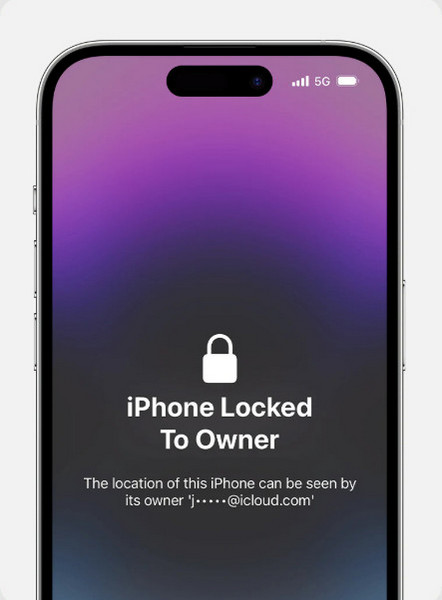
How it works: When Find My is turned on, Activation Lock turns on automatically. Every time the iPhone is activated or restored, it contacts Apple to check whether Activation Lock is on. If it is, the Apple Account password is required before anyone can turn off Find My, erase the device, or reactivate it.
When you typically see it:
- You bought a second-hand iPhone that the seller didn't remove from their account.
- You erased your own device without signing out of iCloud first.
- You forgot the Apple Account credentials.
- The iPhone was previously managed by an organization and still has Activation Lock enabled.
Parte 2. Como redefinir um iPhone bloqueado para o proprietário [5 métodos]
Se o seu iPhone estiver bloqueado para o proprietário após uma redefinição de fábrica, isso significa que o Bloqueio de Ativação ainda está ativo no dispositivo. Muitas vezes, isso acontece porque o recurso "Remover Ativação do iPhone" não é usado ao descartar o telefone. Felizmente, você pode tomar algumas medidas para combater isso, dependendo da sua situação. Você pode usar estas cinco soluções para redefinir seu iPhone e recuperar o acesso a ele.
| Método | Melhor para | What you need | Main limitation |
| Contact the original owner | Second-hand phones | Seller’s Apple Account | Requires the previous owner’s cooperation |
| Modo de recuperação | You know the original Apple ID and password | A computer with Finder or iTunes | Useless without the original credentials |
| Perturbação de DNS | Old iOS devices, temporary Wi-Fi use only | A Wi-Fi network and a custom DNS address | iOS 8-10 only, resets after reboot |
| Suporte da Apple | You can prove ownership | Original receipt/proof of purchase | Apple verifies the claim before removing the lock |
| imyPass iPassGo | No credentials and no receipt | A computer and a USB cable | Not a free method |
Método 1: Contate o Proprietário Original - Melhor Solução Legal
Asking the previous owner is the cleanest fix, because only they can remove the device from their own Apple Account.
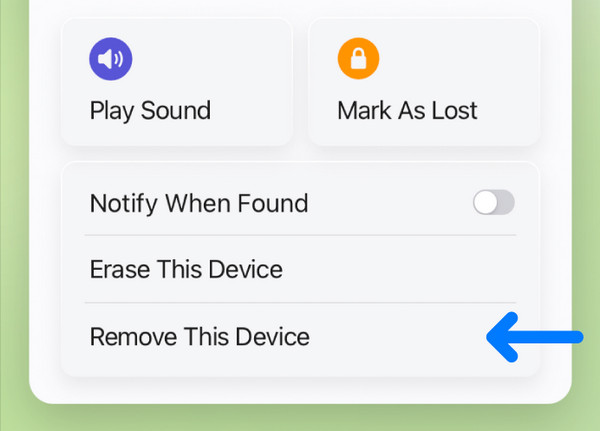
Ask the previous owner to sign in at iCloud.com/find with their Apple Account.
Have them select your iPhone from the device list and choose Apagar iPhone.
Ask them to choose Remover da conta so the device is no longer linked to Activation Lock.
Restart the iPhone and complete setup from the Hello screen.
Método 2: Use o Modo de Recuperação - Se você souber as credenciais do ID Apple
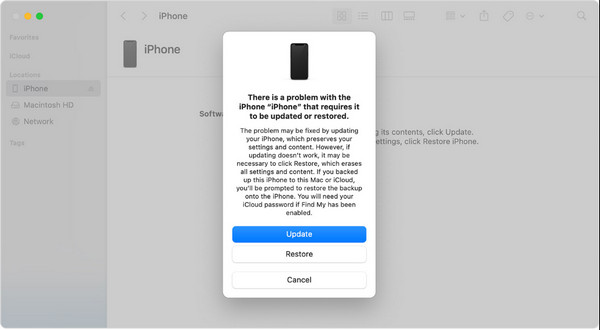
A Modo de recuperação restore reinstalls iOS; it doesn't turn off Activation Lock. After the restore, the iPhone contacts Apple's activation servers again and asks for the Apple Account previously linked to it. Use this method only if you already have those credentials.
Connect the iPhone to a Mac (Finder) or a PC with iTunes installed.
Put the iPhone into Recovery Mode with the button sequence for your model, and keep it connected.
Escolher Restaurar in the Finder or iTunes prompt, then wait for iOS to be reinstalled.
On the Activation Lock screen, enter the original Apple Account and password.
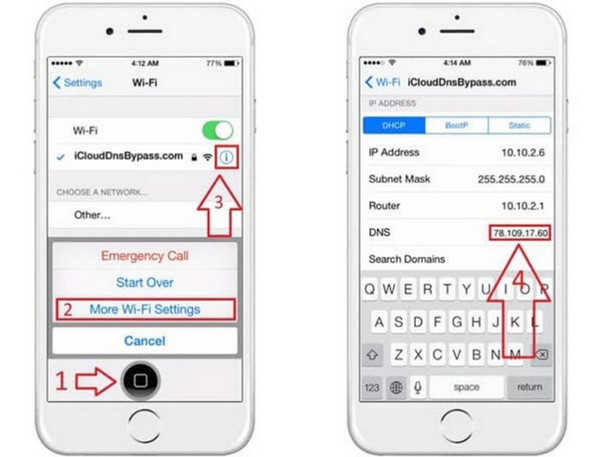
Método 3: Use o desvio de DNS - Solução temporária para ativação de Wi-Fi
DNS bypass is an old trick that mostly worked on iOS 8, 9 and 10. It does not work on newer iOS versions or current iPhones. It never removes the lock from Apple's servers - it just sends the setup screens through another DNS server so a small Wi-Fi menu appears. You get no calls, no iCloud sign-in and no App Store, and you have to do it again after a restart.
On the Activation Lock screen, open Wi-Fi settings and tap the "eu" next to your network.
Escolher Configurar DNS > Manual and enter a bypass DNS address for your region.
Reconnect to Wi-Fi and go back to the activation screen.
Use only the Wi-Fi options in that menu. Do not type in personal or payment details.
Método 4: Use o Suporte da Apple - Comprovante de compra necessário
Se você apresentar um comprovante de propriedade, a Apple pode ajudar a desbloquear o dispositivo. Entre em contato com o Suporte da Apple e forneça uma lista de IMEI ou número de série com seu nome. Após a confirmação da solicitação, eles poderão reiniciar o telefone remotamente sem precisar de uma senha. Isso é importante quando você recebe um iPhone de alguém com quem não consegue mais entrar em contato.
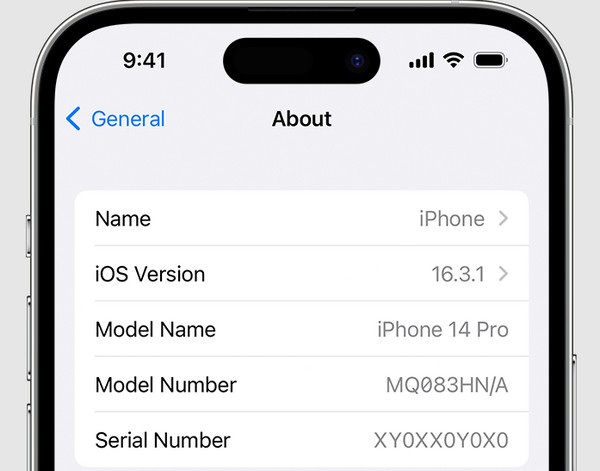
Method 5: Use a Professional Third-Party Bypass Tool
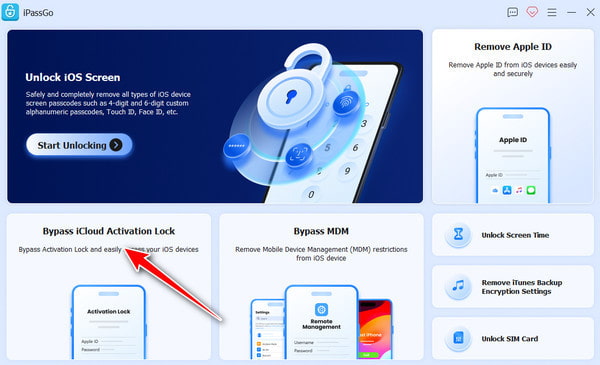
If nothing else works, a desktop professional tool can help you remove the Activation Lock easily. imyPass iPassGo works on iPhone and iPad to remove Activation Lock, screen passcodes, MDM profiles, Apple IDs and Screen Time passcodes. It supports most iOS versions and you can run it on a Windows or Mac computer with a USB cable.
Part 3. What Doesn't Work & Make Sure to Avoid These Scams
Ao tentar redefinir um iPhone bloqueado após uma redefinição de fábrica, é fácil cair em soluções rápidas que não funcionam ou, pior, acabam sendo golpes. Muitos serviços e ferramentas prometem desbloquear seu iPhone em minutos, mas a maioria deles não é confiável ou é completamente falsa. Aqui estão os pontos a serem observados:
1. Serviços falsos de "desbloqueio do iCloud"
Muitos sites ou vendedores fraudulentos dizem que podem desbloquear seu iCloud por um preço. Muitas vezes, eles alegam desbloquear o Bloqueio de Ativação sem a necessidade de um ID Apple. Na maioria dos casos, você recebe uma garantia informando o IMEI ou o número de série do seu iPhone, mas, após o pagamento, nada acontece.
Às vezes, após o pagamento inicial, eles podem insistir em um valor adicional, alegando que é para ativação ou manutenção do servidor. Isso é simplesmente parte da fraude. Além disso, essas plataformas pegam seu dinheiro e podem usar os dados obtidos para atividades prejudiciais.
2. Digitar a senha errada repetidamente
Se o ID Apple for desconhecido, tentar adivinhar a senha repetidamente não ajudará. Em vez disso, pode acionar medidas de segurança que impedem você de usar o iPhone. Se o seu telefone estiver desativado, suas chances são ainda menores, e você pode ter que esperar alguns dias ou até mais pela próxima tentativa.
Este método não contorna o problema de redefinir o iPhone para as configurações de fábrica e bloqueá-lo para o proprietário. A Apple criou o Bloqueio de Ativação para proteger dispositivos perdidos ou roubados. Adivinhar não ajudará, e você pode acabar sendo banido para sempre em vez de... desbloqueando o bloqueio de ativação no iPhone.
3. Software não autorizado ou ferramentas de jailbreak
Você pode encontrar cursos online que prometem hackear o Bloqueio de Ativação usando jailbreak e software não aprovado. Embora possam parecer impressionantes no início, com sites ou vídeos chamativos, podem se tornar um problema real a longo prazo.
Antes de fazer o jailbreak do seu telefone, esteja ciente de que isso pode anular a garantia e comprometer recursos essenciais. Se você usar um bypass para corrigir o problema, poderá ficar sem poder fazer chamadas por muito tempo e perder o acesso ao iCloud, à App Store e às atualizações do smartphone. Infelizmente, alguns desses programas podem instalar malware no seu dispositivo e roubar seus dados sem que você perceba.
Perguntas frequentes.
-
Does a factory reset remove Activation Lock?
No. A factory reset erases the device's local data but does not remove Activation Lock. The iPhone remains linked to the previously used Apple Account.
-
Can I reset an iPhone that is locked to the owner without password?
You can ask the previous owner to remove it remotely, contact Apple with valid proof of purchase, or use a third-party removal tool like imyPass iPassGo.
-
Can Recovery Mode bypass iPhone Activation Lock?
No. Recovery Mode can erase an iPhone and reinstall iOS, but Activation Lock will still appear during setup. You still need the Apple Account credentials.
Conclusão
Um iPhone locked to the owner after a factory reset is still protected by Activation Lock, so no reset will clear it by itself. Pick the method that fits you. The solutions we have mentioned are great aids to use. However, not every solution is the best choice, which is why it is essential to be knowledgeable about this topic. Before buying a used iPhone, always check that the seller has removed it from their account.
Samuel specializes in password security and digital privacy. He used to work as a cybersecurity consultant for small businesses to protect digital assets. With certifications in Cybersecurity and Ethical Hacking, he turns complex security topics into easy-to-follow advice. He also enjoys sharing password tips to help users protect their accounts more confidently.
Soluções quentes
-
Desbloquear iOS
-
Dicas para iOS
-
Desbloquear Android
-
dicas de senha